Patreon Hot Seat — Sketchbook Silliness
This is the next of a series of Hot Seat critiques in which we’ll be discussing members’ Patreon outreach. Next up…
Sketchbook Silliness
The content you are trying to access is only available to members.
This is the next of a series of Hot Seat critiques in which we’ll be discussing members’ Patreon outreach. Next up…
The content you are trying to access is only available to members.
In a follow-up to last episodes remarks on the changing webcomics-publishing landscape, we drill deeper on exactly what constitutes an effective social-media strategy.
The content you are trying to access is only available to members.
In discussing his book, Hitmakers: The Science of Popularity, on NPR’s TechNation, author Derek Thompson shared a story about the number-one (non-seasonal*) pop single of all time — Rock Around the Clock. And it holds insight for those of us who would like to expand the popularity of our own work.
The content you are trying to access is only available to members.
When webcomics started out, longform creators felt like the ugly ducklings in the crowd. Many of them expressed the same complaint when I’d talk to them. They just didn’t feel as if the Web was the right place to present their work to its full strength. However, I think the Web— and its users — have both improved and matured to a point that longform comics not only can survive — but thrive — on new platforms (such as eComics).
But it kills me — kills me — when I see longform-comics creators continually trying to present their work in the “traditional” webcomic set-up that was heavily geared towards strips and other short-form comic. It’s a classic square peg scenario.
I think longform comics are on the cusp of a real revolution, and the artists who are going to best position themselves to take advantage of this will be the ones who will adapt their publishing approach to a new way of thinking.
Here are a few thoughts on where I think that new way of thinking should go.
Pages are the units of a book. Updates are the units of a Web site. The two are not interchangeable.
If you’re posting the pages of your book on the Web, I think you may be making a mistake (unless you’re planning those pages very carefully).
Your Web site itself (and the reading experience on a Web site) is not conducive to book-reading. And if you want your Web site to flourish, you’re going to have to create the best-possible reading experience on that site — not a book-reading experience that you shoe-horn into a Web site.
Make sense.
UPDATE = HALF-PAGE
Now there are a lot of ways to do this. I’m particularly fond of Scott Kurtz’s approach at Table Titans, and I strongly urge you to give it some thought. Every update is a half-page of the book he will later release. And every update has a significant element to it — a punchline, a plot hook, a cliff-hanger, etc. He writes the comic with the site/book polarity in mind. He knows that every update has to be important for the site, and he knows exactly how those updates fit into the overall book (top of page, end of right-hand page, etc.).
And this guides his writing. If he needs another update to make a two-page spread work right in the book, for example, he’ll do that. And he’ll make sure it’s significant for the site — at the same time that it fits into the storytelling of the book.
Challenging? Absolutely.
Impossible? Absolutely not. It’s just a new way of thinking about storytelling.
SLIDING SCALE UPDATE
Here’s another option: You simply release your graphic novel in significant updates. And if that means releasing two panels today and a page-and-a-half on the next scheduled update day, then that’s what it means.
This approach takes less planning in the writing stage — and allows you to keep the storytelling in the book “pure.” But it’s going to put you in a tight spot sooner or later as you run out of finished, significant updates to post.
FILLERS, SKETCHES, GUEST ART, ETC.
This is poison to the Web-reading experience. You fool yourself into believing that you had a post up for your readers that day — and, to an extend you kinda do. But that crap lives forever in your archive, taking readers out of the spell that you’re trying to weave as a storyteller.
Please don’t settle for this in leiu of doing a little planning and time management. You’re hurting yourself.
I think a longform-comic creator should give seriosus consideration to instituting a landing page as the main page of their site. I go into this subject in greater detail here.
The Frequent/Consistent/Significant rule will always apply to a comic on the Web. There are no special dispensations for longform comics. Every update has to be updated as frequently as it possibly can be, while maintaining consistency (of quality and schedule) and significance of each, individual update.
That’s another challenge — to the writing for sure — and to the comics-creation process overall.
But here’s where I think the payoff is…
Digital tablets are so widespread as to make them almost an assumed possession among our readers.
And it’s so freaking easy to sell digital downloads — either independently, through sites like SendOwl and Gumroad, or through online distributors such as ComiXology and DriveThruComics — that you literally don’t have an excuse to avoid it any longer.
A longform-comic Web site, therefore, should be set up in such a way that readers (even new ones) instantly understand the following:
That’s the user experience you have to set up — in the first screen view of your site.
Again, that’s going to take some planning — and some excellent time-management skills. But I think there’s a way that longform creators can make this work.
What I see as a possibility is a publishing cycle that (a) identifies the time-constraint placed on the callenges I laid out above, and actually (b) builds in the extra time needed to make this happen. Here’s the cycle:
PLANNING
The book is planned, plotted, and outlined. You know where the story is going conceptually, but more importantly, you know how many updates you have (and, on the other side of the coin, how many pages you’ll have for your impending book/digital download). You don’t have to have every last word written, and there’s a little room for wiggle, but you have a strong outline against which you can plan your approach.
And since you have a plan, you can now determine:
LAUNCH
Once you’re ready, you now launch your longform comic. You make an announcement. You hit inbound social media* as hard as you can. You send preview comics and press-releases out to sites that cover comics news. And you have reader-grabbing updates in place to… well… grab those readers your driving to your site.
* Your Twitter feed, your Facebook page, etc… all sending traffic “inbound” to your Web site.
PUBLISHING
This looks more like “traditional” webcomics publishing. You have ads on the site to generate income. You’re facilitating social-media evangelists through outbound social-media buttons (ones that allow users to share your work with their friends). You’re facilitating comments and other Community Building aspects of webcomics. You’re running a webcomic, except…
PUSH THE DIGITAL DOWNLOAD
…where a traditional webcomic would encourage readers to dive through the archives, you’re making sure they know they can read previous chapters (or even previous books, issues or volumes) by purchasing digital downloads. These links are prominent, and your “message” on the site, social media, etc. reinforces this fact.
CONSIDER THE PRE-RELEASE
Of course, if you’re updating on the fly, you’re getting updates finished just in time for publication on your Web site. But if you’ve planned ahead, you can offer interested readers the entire chapter (or book) as a digital download — which includes the stuff that’s already appeared on the site as well as the rest of the content they haven’t seen online, all the way to the end of the chapter/book/etc.
THE FINALE
At the grand finale, we have the completed piece (chapter/book/etc.) available as a digital download. If a printed version of the comic is in your plans, this is when you launch the Kickstarter. You have a product in hand, a dedicated reader base, and a clear path to your product. These are all important ingredients to a successful crowd-sourcing campaign.
DORMANCY
And now you go dormant. Well, not completely dormant, but the activity on your site slows down. You convert it from an active webcomic to a storefront for your digital download(s). Make sure there’s a message explaining when the next live content will begin appearing on the site. And you can even post teasers for the next round with sketches, etc — as long as they’re not included in your comic’s archive.
During the “dormancy” period, you go back to “PLANNING” and start the entire process over again.
You won’t be getting as much ad revenue, but as you’re doing the planning, you should also be focused on selling that chapter/book that you’ve created, and that’s going to be the revenue stream that sustains you during “dormancy.” You’ll be pushing the content out through all of the channels you can, too — ComiXology, DriveThruComics, apps, etc. And, of course, the Kickstarter money for the book — and the subsequent sales of that book. All of this is your revenue during “dormancy.”
Then you do the whole thing over again.
Now, obviously, there is a wide range of longform comics, and this probably won’t apply to some. However, I think there are elements there that could apply to all of them. And there are creative people who will take that framework and run with it.
But that’s my thoughts on running a longform comic on the Web. What are yours?
A subscription to Webcomics.com is only $2.50 a month when you subscribe for a year. Not sure? Try out the site risk-free for five bucks.
Here’s an alternate approach to longform comics that you should consider…
A Webcomics.com member got some fantastic advice over at a Facebook Group for webcartoonists and then wrote in asking for some advice on implementing this fantastic advice. And I do my level best to do exactly that…
The content you are trying to access is only available to members.
It has long been my opinion that we have entered “post-advertising webcomics” — webcomics that are published without the central support of advertising revenue. Today’s webcomics are much more likely to be anchored by crowdfunding — namely Kickstarter and Patreon.
So I was excited to see this Patreon page pop up…
In short, Rickard Jonasson was the creator of the webcomic, Two Guys and a Guy. It was a popular webcomic that posted three-days a week… and then sporadically… and then went on hiatus last December. In the words of Jonasson:
Until now I haven’t shared with anyone why I suddenly stopped updating it. This is partly due to shame, but also that I always planned on picking it back up again, eventually. But i wasn’t really sure how, as something had to change. The way I used to do it caused me so much stress that it drove me into a depression that I had to spend months dealing with. I even stopped drinking, whaaat?!
The thing was, I felt like I owed you guys updates, and I felt really guilty every time I missed one. That isn’t healthy, especially since the comic is free and the money I made from ads and such was meager to say the least. It just wasn’t worth missing out on so much of life because of a comic I got so little from, well, besides creative fulfillment.
Which is a shame, because for all intents and purposes, twogag seems to be a popular comic.
So, he’s bringing the comic back. But the fascinating thing is how he’s choosing to do this. And I think it’s the official start of the second phase of Post-Advertising Webcomics.
The content you are trying to access is only available to members.
September was an excellent example of the tremendous value offered by a subscription to Webcomics.com. My readers got early alerts on issues that would impact their businesses, helpful tutorials, insightful analysis, and meaningful feedback on their work. Here are some samples of what you may have missed…
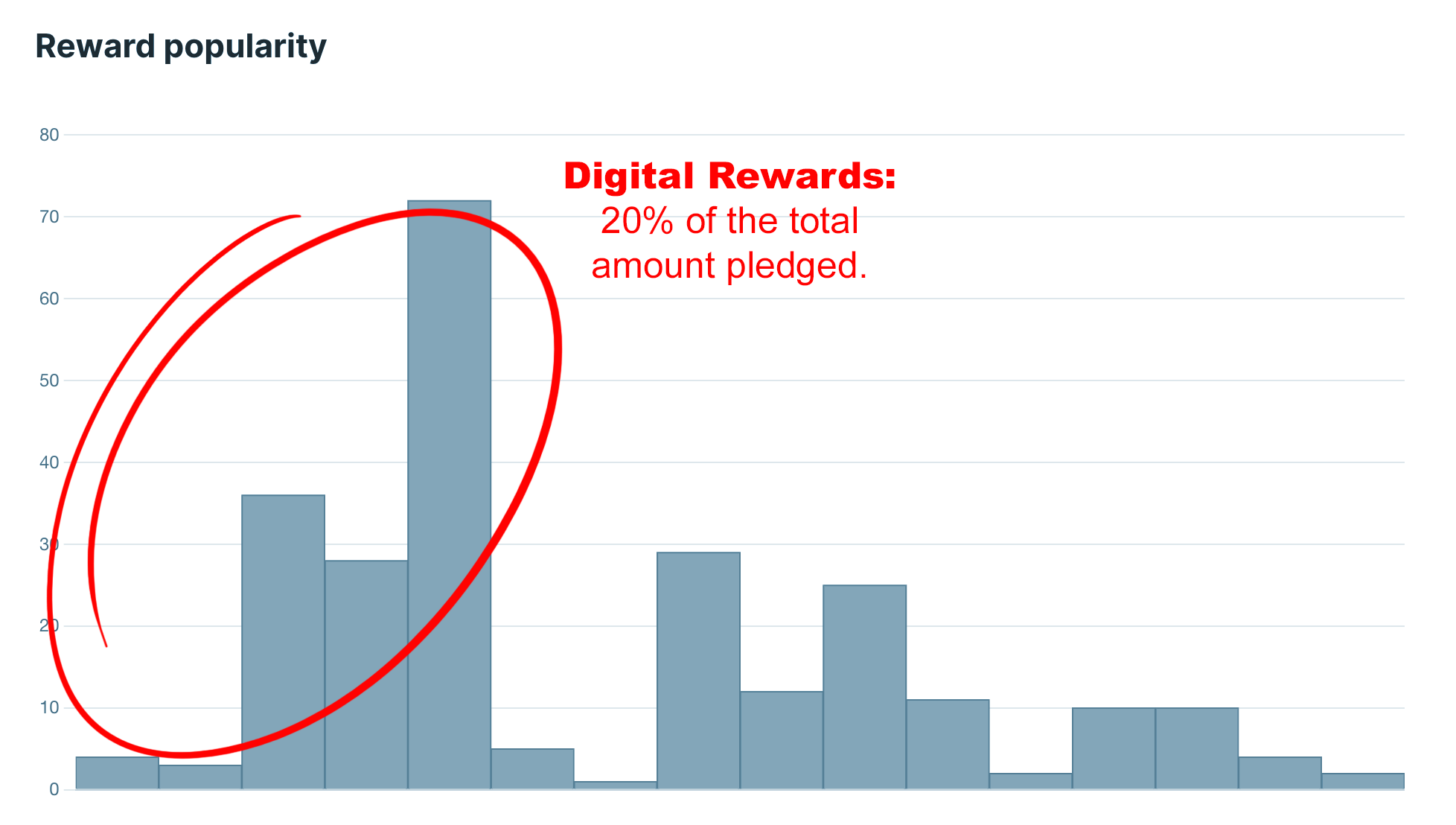
The detailed analysis of members’ Patreon strategies continued last month. We’ve seen some very good applications of some of the approaches suggested here at Webcomics.com. One member wrote:
I transformed my Patreon back in May with a bunch of advice from Webcomics.com, in fact. The Webcomic Confidentials on Cargo Cults and The Death of Ads, as well as a few articles including 12 ways you’re doing Patreon wrong were huge eye-openers for me. (also the one on not doing cons anymore and focusing on Patreon and Kickstarters).
And here’s the numbers to back up their claim:

We’re discussed one of the most complicated parts of self-publishing a book — getting quotes from printers. We’ll talk about how to prepare for the quote request —and then how to make sense of it once it arrives! Plus, pitfalls and common mistakes to avoid. [Subscribers can view the entire video tutorial]
A Webcomics.com member asked me: What’s the standard size for a comic strip?
There’s no such thing as a “standard” comic-strip size — at least, not in the sense that there once was. But — over the years — a sort of accepted norm has developed. This was a Free Friday post, and you can read the rest right here.
Someone on the Internet got under my skin, and all you got was this lousy episode of Webcomics Confidential! A poorly-thought-out suggestion for a comics anthology posted on Facebook raises my ire, and I turn on the cameras and start venting. Folks, running a group project is a lot more complicated than chirping “Let’s put on a show!” And if you don’t understand what you’re getting into, it could come back and bite you later. Let’s take a not-so-starry-eyed look at the reality behind group projects…
You’ve been doing your webcomic for over ten years now, and you’re just not getting anywhere. Worse yet, you have family obligations and other pressures that make it hard for you to devote time to your craft. It’s time to make the hard decision — not to quit — but to let your creativity cocoon for a more opportune time. [Subscribers can view the entire video]
This is a follow-up to Episode 29, when we talked about decided when to quit webcomics — or, more appropriately, take time for a creative cocoon. We have the response from the person who originally wrote in, plus we’ll talk about a cartoonist who thinks that readers won’t buy indie comics. Correction: They won’t buy crappy indie comics. [Subscribers can view the entire video]
Independent comics have been on my mind recently — specifically, how can we as indie comics artists better present our work to a comics-buying public that seems to be cooling on Marvel and DC? [Subscribers can view the entire video]
I was lucky enough to get a generous review on io9.com a few years ago. And in the comments section under the review, the response was overwhelmingly positive. I was being tweeted, and e-mailed and Liked.
It was a really good weekend.
Until I read this.
“I tried giving this comic a read, and it wasn’t funny at all.
What a waste of time.”
My pageviews were astronomical. People were clearly pouring through the archives. And the positive comments were kind to say the least. Obviously, I was doing something right.
But you know which comment stayed with me: “What a waste of time.”
[Read the rest of this FREE FRIDAY post right now!]
There seems to be some misinformation going around about whether it’s legal to ship comics using the Media Mail service of the U.S. Postal Service.
Since misunderstanding this could cost you thousands, let’s get it straightened out now.
Here’s the passage on the USPO Web site regarding comics and Media Mail — with the pertinent passage in bold.
Media Mail packages may not contain advertising. Comic books do not meet this standard. Books may contain incidental announcements of other books and sound recordings may contain incidental announcements of other sound recordings. In accordance with standards in the Mailing Standards of the United States Postal Service, Domestic Mail Manual (DMM), Section 170, Media Mail packages must have a delivery address and the sender’s return address and are subject to inspection by the Postal Service™. Upon such inspection, matter not eligible for the Media Mail rate may be assessed at the proper price and sent to the recipient postage due, or the sender may be contacted for additional postage.
So, if you’re shipping graphic novels that do not contain advertising, you can use Media Mail to do so — as long as those graphic novels don’t contain ads.
If you’re shipping floppies — i.e. monthly comics that contain advertising — then you may not use Media Mail.
In the early days of webcomics, a preferred method of promotion was the ol’ link exchange. “I’ll link to your comic if you link to mine.” Today’s crowdfunded business model requires a little twist on that old axiom.
Exposing your patrons to someone else’s Patreon campaign isn’t only a good idea, it’s great content!
Here’s what I mean. I found one thing to be unquestionably true for me: The more content I post, the more pledges I get.
This is especially true for exclusive posts (as I discussed in my piece on scarcity).
So, every once in a while, I search Patreon for people who are doing something similar to what I’m doing.
Then I approach the person about a content trade. I’ll post something of theirs exclusively to my patrons. (Something they’ve already offered to their patrons.) And they can post something from my Patreon archive for their patrons.
It’s a win-win.

We both get content that we think our patrons will enjoy. We both get an opportunity to expose our work to the people pledging to the other person.
And, of course, when both of you promote the exchange on your own social-media networks, it’s twice the promotion.
I know the fear. “They’ll like the other person better, and ditch me in favor of them.”
I can tell you from experience, I get a lot of new pledges who are continuing their pledge to the other person. (I know, because I always click that button to see who else they’re supporting.) For me, it has been a “rising tide lifts all boats” situation.
A Webcomics.com member writes: “I would love to know your current thoughts on printing collections of Webcomics. Specifically the practice of publishing semi annual chronological collections of the strip, as most webcomic creators used to do. … in recent years it seems most webcomic creators have gotten away from this practice.”
It’s a great topic, so let’s discuss it. Is Print Dead (Again)?
The content you are trying to access is only available to members.
It’s October again — and it brings out the curmudgeon in me every year. In this episode of Webcomics Confidential, let’s discuss events like Inktober and 24-Hour Comics Day.
The content you are trying to access is only available to members.