Starting a webcomic in 2026 isn’t about chasing algorithms or copying what’s popular — it’s about building something sustainable, creative, and yours. In this episode, Brad Guigar and Dave Kellett break down what new cartoonists actually need to focus on in their first years: writing first, consistency over hype, owning your work, and building an audience the right way.
You’ll learn why you don’t need Webtoon or Tapas, why monetizing too early can derail your career, how social media really fits into comics growth today, and why a website and mailing list are non-negotiable. This is a marathon mindset episode for creators who want to do comics for the long haul — and do them for love.
Getting off on the Right Foot
- Don’t try to “game” your readership. Write about what YOU like. Readers are drawn to a creator’s passion. It doesn’t work the other way around.
- Building readership takes time and consistency. Creating for love is essential in the early years.
- Focus on writing as the core of comic creation. They’re called comics readers, not comics lookers. It’s all about the writing.
- Focus on creating comics for the love of the craft. The first comics may only be seen by you; embrace the process.
- Mistakes in the early stages are recoverable. Stop fretting over them.
- Common copyright fears and how to approach them
- Own and control your work
Building an audience
- You do NOT need to be on Webtoon/Tapas. Look at the comics on the front pages of those sites? Does your comic look like those? Is your content similar? If not, you’re not going to fare well there. It’s pretty obvious.
- Social media presence is still important for comic creators. Today, we recommend Bluesky and Reddit. ComicLab has Collections that provide solid social-media strategies. They’re free to members and available at a one-time fee for others.
- Be active on social media to build your audience. Follow the Four Cs — Creation, Curation, Commercial, and Kindness
- How many updates? FCS — Frequent / Consistent / Significant — there are no magic numbers.
- Start building your mailing list NOW with a newsletter. This will be increasingly important when you turn to monetization in a few years. You should send every comic out in a newsletter post and you should also post a weekly newsletter of no longer than 500 words per update with BTS content (to the extent you’re comfortable sharing).
- You need a website. This is not old or outdated — it’s incredibly powerful, and you need to start planning for one now… even if it’s a very bare-bones site. This is a non-negotiable.
- Consider The 2-2-1 Rule: Two social media platforms, two newsletters (including a free-membership tier on Patreon), one website. Then, use these together to funnel traffic inward towards the website. Later, when you’ve launched monetization, the funnel will direct towards that.
- Don’t listen to your reader; listen to your readers
- Don’t mistake social media followers for income.
Monetization
- DON’T START MONETIZING IN YOUR FIRST YEAR. Maybe not even the second. Everything you need to know about crowdfunding is in the name. First comes the crowd, THEN comes the funding. In the first few years, you need to focus on building that crowd. The only thing worse than having no Patreon backers is having ONE Patreon backer. Hundreds of new comic creators have become derailed by focusing on monetization too soon.
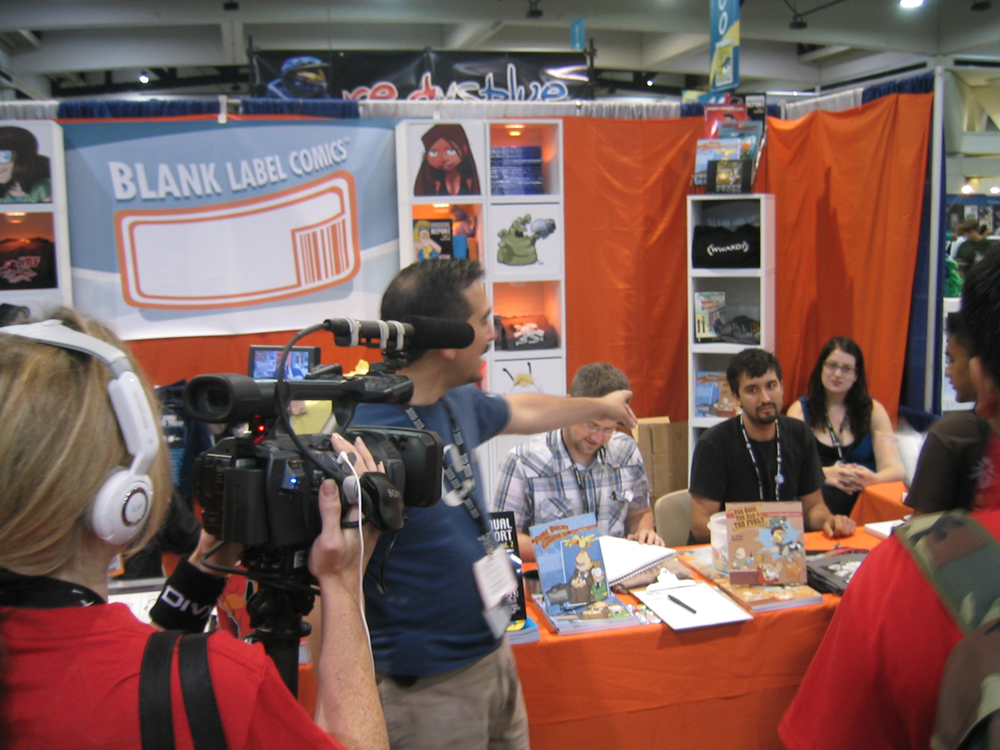
- Comic Cons: We don’t recommend them. They don’t build audience. They don’t have great sales unless you have a lot of merch that *does well as in-person merch* (there’s a difference!). And it’s very hard to make profit unless you can religiously control costs. If you’re making merch to go to the show, you’re doing this all wrong. Psychologically, a lot of folks like to “play” professional cartoonist by exhitibiting.
- Accepted into show start making stuff to sell.
- Start planning now for print — hi-res (400+ dpi), bigger than final size, cmyk, maintain layers, etc. Save in the native software.
Marathon thinking
- Persistence is key; it’s a marathon, not a sprint. If you need a schedule to post regularly, set a schedule and stick to it.
- Develop your aesthetic by studying good comics.
- Seek honest feedback to improve your work.
- Reach out to other comics creators who are doing stuff that’s similar to yours and build networks.










 Loading ...