June To-Do List
It’s June. We’re nearly halfway through the year already!
The content you are trying to access is only available to members.It’s June. We’re nearly halfway through the year already!
The content you are trying to access is only available to members.Now that comic creators are returning to websites, SEO (search engine optimization) is once again a hot topic. We’ll talk about methods to help search engines index comics. Also, if Brad and Dave were to design a four-year degree for cartoonists, what classes would be on the curriculum?
Today’s show
Summary
In this episode, Dave Kellett and Brad Guigar discuss the importance of SEO for comic creators, particularly in 2025, highlighting best practices for optimizing webcomics. The episode concludes with practical tips for improving website performance and audience engagement through effective content strategies. In the mid-show updates, Dave Kellett and Brad Guigar promote their upcoming ComicLab LIVE stage show at the NCS convention in August, examine the implications of Apple’s recent court loss, and thank superfan Ray Michaels for updating Dave Kellett’s Wikipedia page.
In the second half, they explore what an ideal art degree for cartoonists might look like, emphasizing the balance between craft and business education. They discuss the ideal curriculum for aspiring comic artists, focusing on creative writing, business skills, art techniques, and the importance of real-world experience. They explore various classes that would benefit students, including humor writing, long-form storytelling, digital tools, and color theory. The discussion emphasizes the need for a well-rounded education that combines artistic skills with practical knowledge to prepare students for a successful career in comics.
The content you are trying to access is only available to members.I often get asked if art school is a good choice for a young person who wants to be a professional cartoonist. They want to know if the experience will actually prepare them for the world they’re going into, and if so, what classes should they focus on. That first question — “Will this school preppare me for the real world?” — is crucial, and I think you should evaluate any secondary-learning institution very closely in this regard. Furthermore, when I start listing the classes I think would be beneficial, art falls to the bottom of a three-part list.
So, for what it’s worth, this is how I would build a four-year degree for someone who wants to be a full-time comic creator. It assumes a 120-credit hour program, broken down into approximately 40 classes (3 credits each). I’ve grouped them by category and semester.
The content you are trying to access is only available to members.A ComicLab listener recently submitted a question for the show: “Some successful artists honestly believe that others aren’t successful because they didn’t ’put in the work.’ They don’t acknowledge the complex machinery of creative industries. What are your views on Survivor Bias in the creative community?“
Buckle up…
The content you are trying to access is only available to members.Offering an original illustration inside a book — as part of an Artist Edition — is a tremendous way to drive sales and/or Kickstarter pledges. But… have you ever tried to draw a decent drawing on a book’s inside cover (or an inside page)? It’s not easy. And — depending on the coating you used on your cover/pages — the ink doesn’t always take to the surface very well. There’s got to be a better way…
The content you are trying to access is only available to members.Today’s show is sponsored by Dreamhost. The first step in owning and controlling your own work is creating a website, and Brad and Dave have relied on Dreamhost for years. Check out Dreamhost.com/comiclab to find out how you can lock in a rate of $2.59/month for three years!
Every beginning cartoonist agonizes over drawing eyes! Why is that — and while we’re at it, what’s the right way to do it? Next, we’ll talk about why we hate anthologies, and answer a listener who suspects his webhost is throttling his traffic.
Today’s show
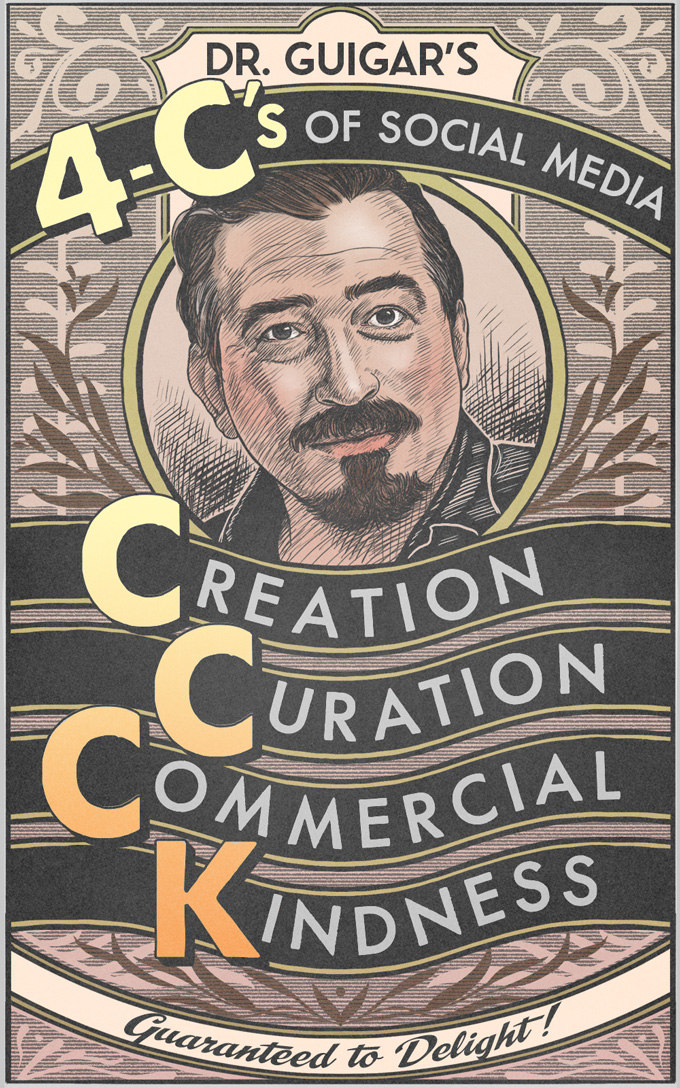
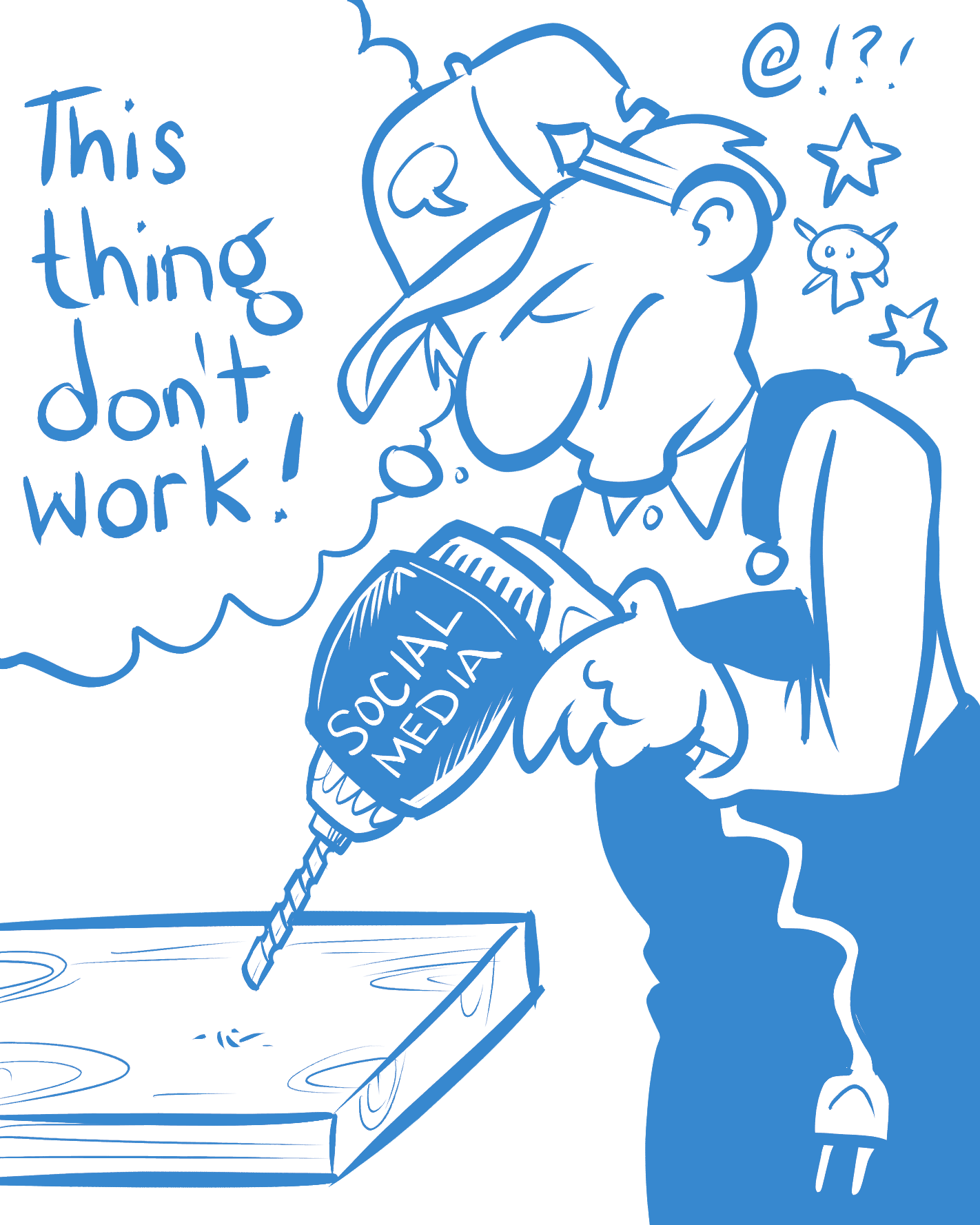
Here’s a thought-provoking question: Does the “more is more” philosophy of social media really lead to success? For instance, is it really better to offer hamburgers five times a week instead of steak twice weekly if you want to build a better career?
The content you are trying to access is only available to members.It’s difficult to be an independent cartoonist. There’s only one place to find comic readers online. There’s only one place where you’re able to get paid for your work. And there’s only one place you can be considered a professional and have hopes of building a career. No, I’m not talking about Webtoons. I’m talking about Keenspot in the opening years of the 2000s. Everything we said then was untrue, just as it is when folks say the same things about Webtoons today.
The content you are trying to access is only available to members.I created a study guide for my Arts Entrepreneurship class, and I thought it might be helpful to post it here, too. It talks about the simple math behind correctly determining the best price for your merchandise.
The content you are trying to access is only available to members.Today’s show is sponsored by Dreamhost. The first step in owning and controlling your own work is creating a website, and Brad and Dave have relied on Dreamhost for years. Check out Dreamhost.com/comiclab to find out how you can lock in a rate of $2.59/month for three years!
Your social media profile needs to answer three questions clearly: Who are you? What do you do? And why should I care? If you’re wasting time being cute, you’re missing out of opportunities. Also, the NCS releases the nominees for Outstanding Cartoonist of the Year, and a person hired to illustrate a children’s book faces a tough question from the writer: How do we sell this thing??
Today’s Show