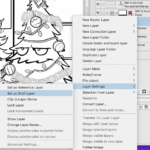
CMYK vs. RGB
If you’re saving your comics in RGB mode, you may be making a potentially expensive mistake.
The content you are trying to access is only available to members.If you’re saving your comics in RGB mode, you may be making a potentially expensive mistake.
The content you are trying to access is only available to members.when it comes to your audience, size doesn’t matter. A small and engaged readership beats a huge, lukewarm audience every time. Here’s why…
I often caution people against trying to manufacture success. In other words, they try to look at what’s hot at the moment and then develop a strip that addresses its popularity. It’s probably the reason the Web is overpopulated with gamer comics. The problem with that is unless you can write — really write — material for that topic, it’s going to sound hollow to your readers, and you’ll never get the traction you need to succeed.
I’d also caution against what I call the “demographic comic.” This is a comic that is based on a strong demographic trend in hopes of attracting an audience from within that trend. An example of this is the syndicated comic, “Dustin.” The core concept of the strip is based on a group demographers called “boomerangers.” These are kids who have graduated college and then move back home with their aging, Baby Boomer parents.
As an aside, that’s not to say that “Dustin” isn’t a perfectly dandy comic or that I’m predicting its failure. What I’m warning you against is basing your writing on a demographic trend instead of basing it on one (or both) of the following:
See, at first, the question is deceptively simple: “How do I know what I want to write about?” I mean… you just know, don’t you?
Well, maybe not. Maybe there’s lots of stuff, and you need to sift through it to find the best option. Maybe you’re looking in the wrong place. And that begs the question of where you should be looking. I’ve given this a lot of thought, and, to the best of my ability, I think you’re going to find the core for Your Best Story in these places.
Your Best Story just might be behind the thing that you know the most about — the topic in which you hold the most experience. And if that’s a seemingly underwhelming topic like quilting, then that’s what it is. Because you know that quilting isn’t just about blankets; it’s about community and relationships and traditions. You know about the culture that has developed among quilters. You know their language, and you know their shared experiences.
You’re an expert in something. You have an exhaustive knowledge of a topic — even if it doesn’t seem to be a particularly marketable one. And, if the past ten years have taught us anything, it’s that no topic is too mundane or too marginalized that it can’t find a healthy niche readership on the Web.
So look in your head. What’s in there? It might not be particularly awesome, but it’s yours. It’s you. Embrace it.
Conversely, Your Best Story might lie in your heart. It might be the topic about which you are infinitely fascinated. It might be that place that your mind always wanders to — no matter where it starts out.
Maybe it’s nature. Maybe it’s the idea of life on other planets. It’s that topic that you know — no matter what — if a movie or a book comes out with this Thing as its theme, you are going to love it.
You might not know a lot about this topic, but you find it endlessly fascinating. You don’t have an exhaustive knowledge about it, necessarily; but you have an inexhaustible interest.
And that leaves you working on a comic about needlepoint naturalists from Dimension X, right?
Well, not necessarily. (Although, it does have possibilities…)
You could develop a comic that is directly and literally linked to your Head or your Heart.
But you could also develop a comic that works off of these themes in a tangental way. For example, someone with an endless fascination of nature could easily direct that passion into an outer-space, sci-fi comic. The naturalists become explorers and the animals become aliens.
And although a comic about quilters may or may not have much of a future on the Web, a story that uses a quilt as a metaphor throughout a larger narrative of life in a rural village could certainly have legs.
The best case scenario, of course, is that you find a theme that applies to both your Head and your Heart. But I’m not going to say that it’s a prerequisite. After all, if you’re really passionate about something, you’re going to end up with the expert-level knowledge in that topic. And you can’t really hold an exhaustive knowledge without a certain amount of passion. Having one is going to lead to the other if it isn’t already there.
But I think this is where Your Story is hiding. In one of those two places. Head and heart.
One thing I can state with conviction is that starting your story from one of these places will have three effects:
This is the reason I don’t place a high value on Instagram. It may be possible to build impressive numbers on Instagram, but the platform itself limits engagement to such a degree as to make the entire venture pointless.
Prove it to yourself: The next time you run a Kickstarter, use the embedded analytics to ascertain how many of your backers came from Instagram. Recently, a cartoonist with an Instagram following of more than 40,000 charted exactly one Kickstarter backer who had come from Instagram. That’s pathetic — to the degree of uselessness.
Is comics a young person’s game? Pull up a (rocking) chair, and let’s talk about it!
ON THIS WEEK’S SHOW…
There seems to be some misinformation going around about whether it’s legal to ship comics using the Media Mail service of the U.S. Postal Service. Since this misunderstanding could cost you hundreds of dollars, let’s get it straightened out now.
The content you are trying to access is only available to members.24-Hour Comics Day is this Sunday. Here’s what you need to know…
The content you are trying to access is only available to members.The Butso Method will change the way you think about writing.
The content you are trying to access is only available to members.Which is more important for a cartoonist to learn — writing or drawing?
ON THIS WEEK’S SHOW…
Writing comedy is a challenge that is made even more daunting by the fact that humor itself is completely subjective and impossible to define. Here are some thoughts on taking a clever idea and pushing it until it’s actually funny.
The content you are trying to access is only available to members.It’s pretty easy to see the influence of manga on comics being produced today. Scrolling through Webtoons, it’s obvious that an entire generation of young comics creators cut their teeth on comics originally made in Japan. In general, that’s tremendous! The creativity, the kinetic energy, the jaw-dropping art — it’s all worthy of emulation. But when it comes to word balloons, something’s getting lost in the translation.
The content you are trying to access is only available to members.It can be frustrating to “hit the wall” in your creative output, but — speaking from experience — that wall isn’t a wall. And once you realize what’s actually happening, you’ll feel a lot better about your journey as an artist.
We often feel the exhilaration as creative people. When our brains are storming, when our synapses are firing, and when our output is exciting… these are the moments we live for!
But it’s not a constant. Sometimes, creativity comes much slower. During those times, it feels as if we’re not progressing. And the excitement that comes from finding something new is a long-distant memory.
If you talk to many artists during those times, they’ll tell you their creativity has “hit the wall.”
But, speaking from a position of experience and perspective, I can assure you that this is not the case. In fact, what you’re experiencing is not a wall, but rather, it’s a plateau. It feels as if you’ve come to a full stop because you’ve stopped experiencing that exhilarating upwards “whoosh” of creativity. But, in fact, you are now on a horizontal plane.
That’s an important distinction. You can move forward on a horizontal plane. It may not be as thrilling as a vertical “whoosh,” but it’s important that you move forward nonetheless.
After all, this is where you learn about yourself as an artist. This is where you build speed. And muscle memory. This is where you master all the things that became apparent during your last explosion of creative energy.
Besides, moving forward is the only way to get to the next “whoosh” of creativity. And trust me, the burst of artistic energy that occurs after a long plateau is a satisfying experience indeed.
Don’t get frustrated about “hitting the wall.” See it for what it is — a preparation for the next big explosion of creativity.
Here are some excellent strategies for getting your brain working again after you feel as if you’ve hit a wall:
PUT PENCIL TO PAPER
For many of us, creativity is intrinsically linked to the act of making marks — writing and/or drawing. When I look back on the times when I felt my creativity had stalled, there’s a common thread — I was unable (or unwilling) to start the physical process.
So snap out of it. If you’re trying to write, start a sentence. Or re-start the sentence that you’re working on a different way. Use different words or put them in another character’s mouth.
If you haven’t even gotten that far, don’t underestimate the power of idle doodling. Start a sketch and follow it where it goes. Fill your page (or several pages) with nonsense, free-associative sketches. It’s amazing how much inspiration comes springing out of this process.
CHANGE YOUR PROCESS
If you write in one particular setting, find a new place. For example, if you write at home, go to the park — or a coffee shop. If you write during the day, switch it up and write at night. But be careful: Ensure you’re still actively pursuing the writing process and not simply avoiding it. In other words, a trip to Starbucks can inspire your writing — but only if you actively try to write while you’re there. If you spend the entire time chatting up the barista or simply staring out the window, you’re doing more avoidance than actual writing.
DO SOMETHING MINDLESS
Clean your room. Fold the laundry. Rake the leaves.
But do these things without the usual headphones or background noise.
Allow yourself to do these things in total quiet. Once your hands are busy, your mind will wander.
GET BORED
I love it when my kids tell me that they’re bored. Because necessity may be the mother of invention, but boredom is the father of creativity.
So let yourself get good and bored. Turn off the music. Unplug the TV.
Oh, and get far, far away from anything that will deliver you the Internet.
Remove all the distractions and then get beautifully bored.
Your mind will find something to do. All you have to do is direct it.
GIVE UP
If you’ve spun your wheels for an hour or so — and I mean really, really tried to get some creativity happening — give up. For now. Do something else that makes productive use of your time. For me, that often means penciling some of the strips I’ve already written. Or do something that needs to be addressed for your business (are your receipts organized and filed so you can find them during tax season?). Or make that improvement to your Web site that you’ve been putting off. Just make it a point to come back to writing at your first opportunity and try again.
EXERCISE
Get your heart rate up, and keep it up. Get a good, long, tiring workout in. And then, once your body is good and exhausted, sit yourself down and write.
SUGAR AND/OR CAFFEINE
Not a health nut? Stop by Dunkin Donuts and pick up a large coffee and a donut. The resulting buzz can propel you into a little chemical-induced creativity.
Before you take this as a license to write off bad eating habits as the cost of doing business, keep this in mind: This works best when the sugar/caffeine comes as a jo