March To-Do List
Get out your calendar and start circling dates. It’s time to do a little webcomics planning.
The content you are trying to access is only available to members.Get out your calendar and start circling dates. It’s time to do a little webcomics planning.
The content you are trying to access is only available to members.TikTok and Instagram reels are moving to the forefront of social media. Is it time to learn video/animation so you can promote your webcomic?
ON THIS WEEK’S SHOW…
In a Surviving Creativity podcast a few years ago, Scott Kurtz, Cory Casoni, and I discussed how creator reaction to the Patreon service fee announcement spiraled out of control — and had some pretty nasty consequences. During that conversation, we identified an urgent need for creators to do better when it comes to crisis management.
The content you are trying to access is only available to members.What’s in a name? Quite a bit if you’re trying to name your book. Crafting the right title can have a significant effect on everything from Kickåstarter pledges to audience response. And there are some very real pitfalls to avoid.
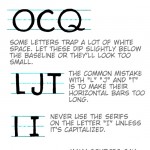
The content you are trying to access is only available to members.Lettering is crucially important — especially if you’re trying to write a humor comic. Comedy is about timing, and bad lettering kills timing. So let’s look at a seldom discussed aspect of lettering — line breaks.
The content you are trying to access is only available to members.Every once in a while, someone asks if it’s possible actually to make a living in comics. It’s a fair question, and it deserves an honest answer.
SPONSORED BY…
ComicLab is brought to you this week by the book “How Comics Were Made, a Visual History from the Drawing Board to the Printed Page.” Comics historian and ComicLab fan Glenn Fleishman has spent years researching the history of newspaper comic strip production and reproduction and is bringing his expertise to this printed work full of comics from Yellow Kid through Krazy Kat, Doonesbury, Peanuts, and, yes, Dave’s own Drive! It will feature never-before-seen original drawings and printing artifacts, such as “flongs,” the hilarious old-fashioned name for printing molds. The book draws from museum collections like the Billy Ireland Library and the Charles M Schulz Library, generous access to artists’ own archives, and Glenn’s personal collection. Glenn’s taking the book to crowdfunding in February, using lessons drawn from this very podcast! You can read more about the book or sign up to get an alert when the campaign launches by going to howcomicsweremade.ink.
ON THIS WEEK’S SHOW…
So you’ve decided to start a webcomic. Or maybe you’re launching a new chapter in your ongoing webcomic. The question eventually arises: What’s the best way to launch? There are a few things you should keep in mind to maximize this exciting time…
Remember “The Child Who Cried Wolf.” Your followers are only going to put up with a finite amount of “coming soon” messages. I would suggest that one or two weeks is plenty of time for pre-promotion. Longer than that is going to try your readers’ patience.
This is an incredibly fine line to walk. Your objective during this time is to express your excitement about an upcoming event — but not tease the event itself.
What’s the difference? Expressing your excitement doesn’t involve an implicit “go-and-look” share statement. This is a good time to post sketches or teaser images. But you’re not talking about the actual launch yet. Talking about the launch itself does involve an implicit go-and-look statement, and you want to save that for the final posts before the Grand Opening.
This is the biggest rookie mistake that webcomic creators make. They make a Big Noise about a launch — building an impressive amount of buzz around the event — and then, on the Big Day, they open to a single page.
Unless that single page has an extremely powerful emotional hook, you’ve effectively lost all of the momentum you’ve spent so much time building. This is especially true of your single page is ambiguous — like a longshot of a castle or a pair of feet running through mud puddles. There’s no emotional hook in a page like that — and therefore, no reason for a potential reader to come back for the rest of the story.
Instead, consider launching your webcomic with a well-developed hook. If you’re smart, you will have written the story so that hook happens quickly — perhaps even in the first eight pages. But whether it takes eight pages — or eighteen — you should have enough pages available on your site on Launch Day to captivate readers so they want to stick around for the entire story.
In the same way that feature films use trailers to entice moviegoers, you could prepare a trailer for your story. It doesn’t have to be animated — it doesn’t even have to be a video — but it should be created with the goal of whetting your potential readers’ appetites for the ongoing narrative.
Remember: Social media is all about sharing. Give your followers a reason to share your posts. And, let’s face it, unless you have a very large existing following of engaged readers, posting: “My comic just went live!” has extremely limited sharing potential.
Why? Because right now, you’re the only one who cares. You need to give your backers a reason to care. What’s that reason? It’s probably closely related to your Elevator Pitch. In other words, what’s your comic about? What makes it special? Why are people going to fall in love with it? Your messaging should be targeted at those concepts — not something mundane like “I just posted the first page.” Tell your followers why they should care.
If you do one thing in the new year, let it be this: eradicate “Support me on Patreon” from your vocabulary. It’s a marketing pitch that just doesn’t work.
The content you are trying to access is only available to members.I like writing about the writing process — especially humor writing. It’s a topic that I find many people who write cartooning tutorials shy away from because it’s so difficult to quantify. But it’s something that’s essential to what we do. So, even though I know I’ll never be able to write a step-by-step guide to writing the perfect joke, I like sharing little moments in which I think I’ve gotten a greater understanding of the process. While teaching my Sequential Art class, I had exactly that kind of moment.
The content you are trying to access is only available to members.A listener asks if they should write one big, successful comic or several mediocre ones. We have a bigger question: What makes you think you have a choice?! Also, it turns out the whole “Substack nazi” thing was yet another case of Platform Panic.
SPONSORED BY…
ComicLab is brought to you this week by the book “How Comics Were Made, a Visual History from the Drawing Board to the Printed Page.”
ON THIS WEEK’S SHOW…
Substack’s Platform Panic
For more information on this topic, please check out these posts:
Many of the people who were making the most noise on this issue are switching to Ghost. Check out Ghost’s TOS — in which they’ve even highlighted their clause on refusing to moderate content! And, on top of that, the total number of nazi accounts that were found on Substack was only 5 or 6, none of them monetized, and collectively had fewer than 200 followers– and most of them wound up being taken down by Substack anyway.