An ellipsis is a punctuation mark comprised of three dots that indicates an intentional omission of a word, sentence, or whole section from a text without altering its original meaning. In comics, however, it’s often used to indicate a pause — or to tell the reader that the dislogue is about to be continued in the next panel (or the next page). But it’s an easy typographical tool to misuse — and abuse. What’s the right way to use those three little dots? The answer…
The content you are trying to access is only available to members.
Comics educator and author Scott McCloud calls them the “bulgy Edsels of comics iconography.” Indeed, cloud-like thought balloons are spurned by most comics artists.
Let’s talk about why that is… and whether it’s warranted or not.
Too many thought balloons
In the early days of comic-book history, as artists and writers struggled to build the lexicon of a fledgling art form, it’s no question that the thought balloon was becoming a crutch. Instead of a glimpse into the thoughts of a character, it was a way of explaining action and plot that should have been illustrated instead.
There’s no doubt that the early Lee/Ditko Spider-Man comics were thought-balloon heavy.
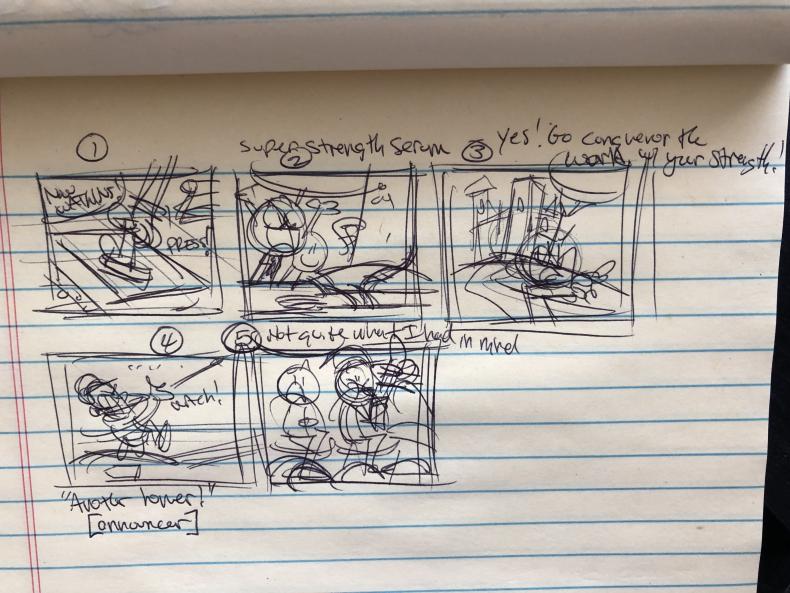
In Panel One, the thought ballon “an electrically-activated mechanical bat” attempts to explain a plot feature that should have been conveyed through illustration instead. Panel Two also uses a thought balloon to do the job of the illustration. In fact, you can see it happening throughout the scene above.
As comics art matured, this overuse of expositional and explanatory thought balloons became frowned upon.
And although comics legend Jack Kirby famously used movies as inspiration for his visuals, the comics industry itself was soon regarding Hollywood as a competitor for consumer dollars as well. And comics artists were encouraged to go beyond inspiration, towards emulation.
Although it was a good idea to limit the overuse of thought balloons, the fact remained that conveying inner thoughts efficiently was a necessary part of some storytelling.
When writer/artist Frank Miller presented Elektra’s internal monologue in narration boxes, it quickly became adopted as a replacement for those exposition-heavy thought balloons.
I like thought balloons — used correctly. Those early craftspeople were right in rejecting the thought balloon used as a storytelling crutch. But criminalizing thought balloons entirely is like throwing the baby out with the bath water.
Comics writer Kurt Buseik may have put it best: “Eschewing thought balloons as a creative choice can result in interesting approaches. Eschewing them as a blanket formula, though, is just dumb.”
Brad and Dave talk about writing characters from outside your own personal experience. Empathy as a writing tool! Then, a listener says they’re losing interest in their comic — can Dave and Brad help?
Questions asked and topics covered…
How do you write characters different from yourself?
Losing interest in your comic
Zines vs formatted-for-phone comics
Releasing the comic as an eBook before it appears on your site
It’s pretty easy to see the influence of manga on comics being produced today. Scrolling through Webtoons, it’s obvious that an entire generation of young comics creators cut their teeth on comics originally made in Japan. In general, that’s tremendous! The creativity, the kinetic energy, the jaw-dropping art — it’s all worthy of emulation.
But when it comes to word balloons, something’s getting lost in the translation.
The content you are trying to access is only available to members.
This week, Brad and Dave recall a guideline for reader retention from the early days of webcomics that’s a relevant today as it was then — the 8-Pages Rule.
Beginning cartoonists often ask what size they should make their comic. Many are looking for “standard” sizes. The answer is a little more complicated than you’d expect — and it means focusing on what’s really important about the comic you’re doing.
The content you are trying to access is only available to members.
A fellow creator once shared that they were told that a comics page should have between 4 and 7 panels per page. Not only is this bad advice, but it removes the focus from where it ought to be.
The content you are trying to access is only available to members.
I polled my Patreon backers, and I asked them one simple question: How did you find out about my Patreon? The answers were surprising to me, so I made the poll ongoing — making the question a part of the welcome package that new Patreon backers receive. After several months of collecting data, I’d like to share my results…
Surprisingly, the vast majority of my Patreon backers are discovering my Patreon content through my site — and not through social media. (Although you could argue that come of them discovered the site itself through social media.) As much as I’m a proponent of publishing through social media, this is a strong argument in favor of continuing my efforts on my own site as well.
Second was Patreon itself. As you know, I don’t feel as if Patreon should be relied upon for discovery — and I talk about that in this episode of Webcomics Confidential…
…however, it’s good to know that Patreon is a solid contributor in that category. (It’s especially impressive since, due to the NSFW nature of my Patreon page, I don’t show up in Patreon’s search results.)
Social media — including Instagram, Facebook and Twitter — are nearly nonexistent players. They account for less than 1.5% apiece. However, as I said earlier, it may well be the case that my backers discovered the site itself through social media.
But that Patreon Content Exchange! That’s a very solid performer, accounting for nearly 4%. And that’s especially impressive since I don’t do content exchanges every month.
The Patreon Content Exchange
Every once in a while, I search Patreon for people who are doing something similar to what I’m doing.
Then I approach the person about a content trade. I’ll post something of theirs exclusively to my patrons. (Something they’ve already offered to their patrons.) And they can post something from myPatreon archive exclusively for their patrons.
(This works best with exclusive content — something that folks can’t get outside of Patreon.)
It’s a win-win.
We both get content that we think our patrons will enjoy. We both get an opportunity to expose our work to the people pledging to the other person.
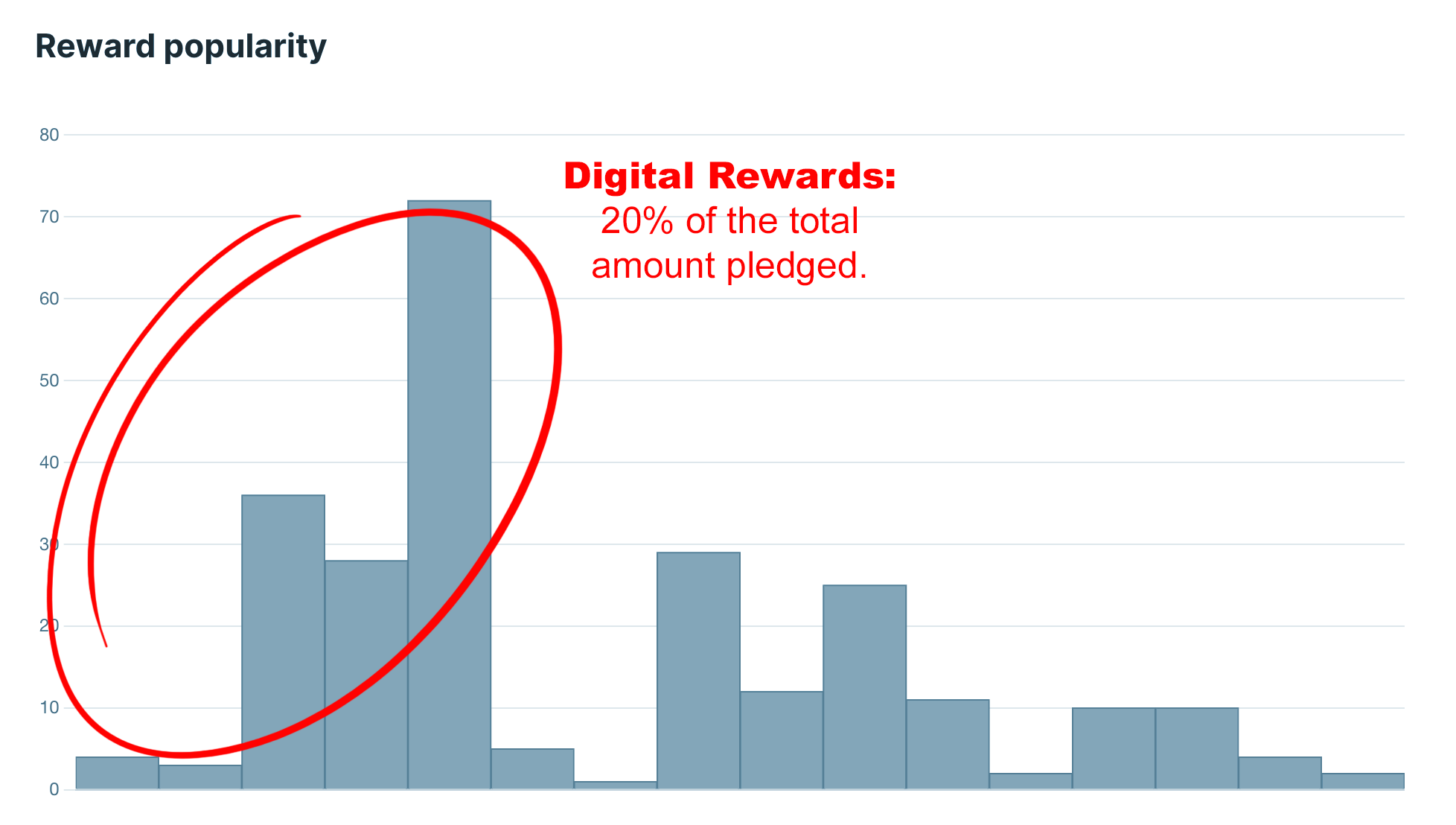
I know the fear. “They’ll like the other person better, and ditch me in favor of them.” That.s not the case. Look at this chart from a content exchange between Javis Ray and me…
I can tell you from experience, I get a lot of new pledges who are continuing their pledge to the other person. (I know, because I always click that button to see who else they’re supporting.) For me, it has been a “rising tide lifts all boats ” situation.