ComicLab Ep 212 — Making NSFW Comics with Special Guest Erika Moen
Today’s show is brought to you by Wacom! Wacom is the maker of the powerful, professional, portable Wacom One! This week, Erika Moen joins us for a show dedicated to questions about creating NSFW comics! If you’ve ever wanted to make sexy comics for the 18+ crowd, this show is for you!
Questions asked and topics covered…
- Erika Moen’s new project focusing on her mental health journey
- How to build a comfort level with NSFW work
- The importance of good art in 18+ comics
- How to draw a vaginal orgasm
- The legalities of NSFW publishing
- Audience building for a sex oriented comic
- Getting feedback on your adults-only comic
Brad Guigar is the creator of Evil Inc and the editor of Webcomics.com Dave Kellett is the creator of Sheldon and Drive.
Listen to ComicLab on…
ComicLab is hosted on Simplecast, helping podcasters since 2013. with industry-leading publishing, distribution, and sharing tools.
Managing commissions
Offering commissions can be a great way to add an income stream to your business. It can also be an effective Patreon reward. But managing expectations and communicating clearly with clients and backers can be a delicate dance. Here’s how to get off on the right foot.
Commission List
Your first step should be to establish a Commissions List. This is a list of spaces available for paying customers/backers to fill with their requests. You should have an idea of how long you’re able to reasonably devote to commissions in a short time period (for example, a month). And you should limit the number of slots to the number of commissions you can comfortably complete during that time. If you’re offering commissions through Kickstarter or Patreon, limit the number of rewards that are available there, as well.
If you start to fall behind and make people wait an unreasonable amount of time for their commissions, you can chase away return customers. And return customers are going to be the driving engine for you commission strategy. My advice: Set strict limits and loosen them only when you’ve got enough experience to make the judgement wisely.
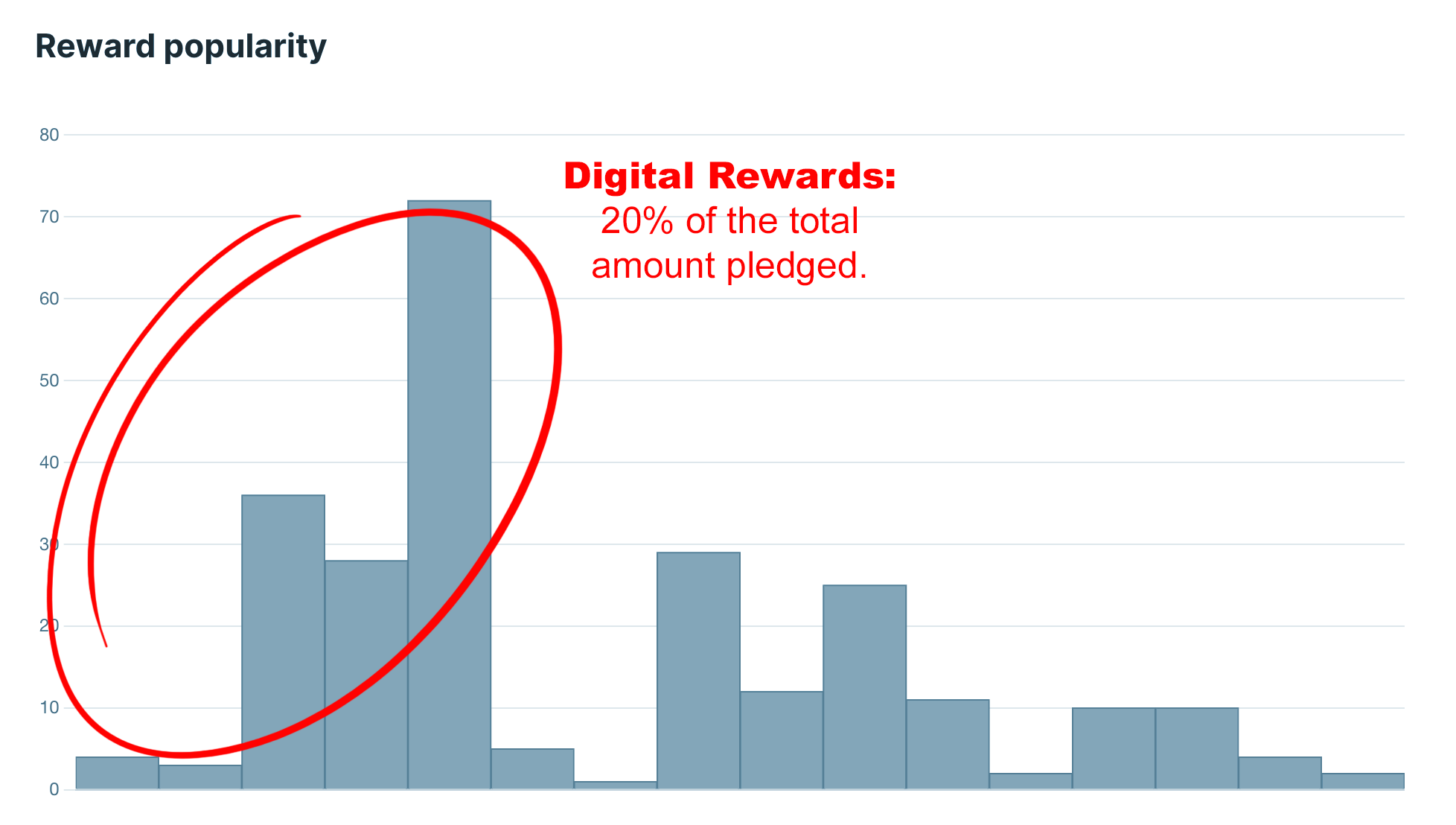
Don’t discount digital
As artists, we tend to prize original art. But many people who want to participate in commissions can often be more focused on the image itself. And they love digital commissions. They just want to see how you’re going to draw the idea they have in mind. Digital commissions are often less expensive, too. When you complete the image, offer them a high-res version for printing and a low-res version for screens.
Price Sheet
Set up a list of all of the types of commissions you’re willing to do, broken down by levels of complexity and price. Some of the options you might consider are:
- Figures: Head / bust / one figure / two figures / etc.
- Color: B&W / flat color / shaded color
- Backgrounds: None / simple / complex
- Characters: Your original characters / their OC / licensed characters
For each combination of the options you’re willing to produce, you should have a price — and maybe even a sample image. You should also include the final size (width x length) of the art.
When you’re deciding what to charge, keep in mind that you only have one opportunity to get paid for this — and it’s a piece of art you’re creating especially for one individual. This is not the time to be meek. Set your price at a level at which you’re adequately compensated for the time you’re going to use creating it. Remember the Golden Rule of price-setting: You can always come down from a high price, but it’s awfully hard to raise a price once customers have the expectations of low amounts.
Get paid up front
Always, always, always demand payment up front. For higher-priced works — like inked commissions on quality illustration board, you be flexible and allow the client to pay 50% up front, but you should not send even a scan of the final art until that remaining 50% has been paid.
Set a reasonable price for your work. Digital art can be priced lower. It can be reproduce. But original art is a one-of-a-kind item, and its scarcity should drive the price higher.
Get paid twice… or three times…
Reserve the right to keep a master copy of the original file — or a high-resolution scan — that you can use in future projects. These make great extras for graphic novels. You can collect all of them into an artbook. Compiled into an eBook, these can also make cool Patreon rewards.
Communicate the process — and then control it
Be upfront about what you’re willing to do — and how the process is going to play out. This is information the client needs to have before they put their money down. For my commissions, it works like this:
- They share their idea — in as much detail as they’re willing to provide
- We discuss the concept and agree on a verbal description.
- I make a loose sketch of the scene for approval
- The client can make requests, but unless it involves an idea/item/concept that we previously discussed, its addition is at my discretion alone. In other words, it is too late to start adding to the scene.
- Once the scene is approved, I move on to final art.
- I share a scan of the final line art before moving to the coloring process.
- I share the final, colored art — hi-res and low-res — along with a sincere thank you.
This is important. Early in the process (before/during the sketch) I will actively solicit the client’s feedback. This is the time to get all of the ideas out. So will use phrases like
- what do you think?
- what are your thoughts?
- let me know what your reaction is
After the sketch has been approved, I change my language. I stop asking questions and start making statements.
- Here’s the sketch!
- Take a look at the inks
- The colored version is now available
Why? Because experience has told me that if you ask questions, you’ll get answers! In other words, in phrasing your thoughts as questions, you’re soliciting input. You can’t be upset when you get what you requested! Once we’re past the sketch-approval phase, I stop soliciting. If there;’s something truly bothering the client, they’ll broach the subject. On the other hand, by asking questions, I’m opening myself up for less-than-serious concerns.
Control the process
Your client is going to be excited that you’re taking their idea and turning it into a reality. And it’s not unusual for that excitement to turn into a runaway train of add-ons and second-guesses. That’s why it’s important to control the process. Tell the client how this process will unfold, and then follow that guideline closely.
For example, you may require half of the payment upfront, offer approval at the sketch stage, and then at the pre-finished-art stage. Then, you might request the remainder of the payment before delivering final art. Make a checklist and send it to the client, listing out all of the steps along the way — as well as what’s expected of them (and you) at each step.
If there’s a clear-cut pathway forward, it’s much more difficult for someone to go charging of in a different direction.
Conventions
Finally, you might offer commissions at conventions. This has the added enticement of your client being able to…
- meet you
- potentially watch you working on a portion of their commission
- receive the final piece directly from your hands
Convention commissions present a unique challenge because of the condensed time frame. Your clients will generally expect the final art by the end of the convention. (This benefits you, as well, because it eliminates shipping costs and logistics.) But that means you have to be finished will all of your commissions before the show ends. Therefore…
- Launch a commissions list before the show starts and publicize it on your site/social media.
- Limit the slots on the list to a reasonable number.
- Get ideas/concepts from your clients before coming to the show
- Start — or even complete — some of the pieces before leaving for the show
- Be prepared to work from your hotel room outside of show hours and bring along the necessary equipment to do so
Manage expectations
Doing commissions successfully really comes down to managing expectations. If you’re not comfortable doing NSFW work, then make that clear. If you are comfortable doing NSFW, you can still set limits as to which concepts or scenes you’d like to avoid.
Make sure your client understands what legal rights they’re buying along with the art. Do they have the right to reproduce the image? Do they have the right to post it online? Will you retain the right to reproduce it — for example, in a book or as a Patreon exclusive?
Commissions can be an excellent way to build another reliable income stream for your business. And it’s excellent for last-minute revenue boosts. Be prepared to guide your clients through a clearly stated pathway, and manage expectations. If you’re successful, you can count on those clients coming back time after time to support your work in comics — and get awesome one-of-a-kind art in the process!
Would you hire a business manager?
In a recent Webcomics.con Poll, we asked: “If I could hire one person to help my webcomics business, it would be a(n)…” The results weren’t particularly surprising. The top response (27%) was “Business Manager.” But here’s the real question…
The content you are trying to access is only available to members.Networking — A Guide for Cartoonists
Since 2013, I’ve been advocating that independent comics artists quit comic cons. Nearly ten years. And since that very first post, the pushback has been the same: “Sure, we’re not making a profit, but we go for the networking.” Except, for many of these people, networking is unimportant. And I can prove it.
The content you are trying to access is only available to members.Getting started with the right attitude

Many people who are thinking about starting a webcomic for the first time have a lot of questions. Where should they publish? What social-media networks work best? How long before they’re able to launch a Patreon? But there’s a very important issue that’s just as important as these — if not moreso. And it’s a question almost none of them ask:
What are my expectations?
Starting with the right attitude
Let’s start here: You’re probably not very good — especially if this is your first time out.ven if you’re a decent artist and a better-than-average writer, you’ve got a lot to learn about your comic. And it’s going to be a learning process that’s completely unique. No one else will be able to tell you “just do this” and guarantee the same outcome they had.
So, perhaps it’s not fair to say you’re not good. It might be more accurate to say: You’re not as good as you’re going to be after you’ve been diligently doing this for quite a while.
I would estimate that 75% of new webcomics miss their full potential because the creator is a better artist than they are a writer. (If they’re doing humor, that number rises to 90%.) The fact of the matter is, you’re going to need time to find your voice as a cartoonist. And that’s OK. We all started out as people who needed to get better — even those folks who seem to be “overnight successes.”
However, if you don’t allow yourself that learning curve, you’ll fall into an easily recognizable pattern:
- Your comic isn’t becoming as popular as you’d envisioned
- You look for reasons — social media tricks, SEO strategies, gimmicks, schemes, etc.
- When you apply any one of these, you get inconsistent results because it’s not about the gimmick, it’s about the comic
- You reassess and realize you’re still not as popular as you’d envisioned
Worse yet, you see other people who have made it, and you have no idea why that isn’t you. You might even feel as if your work is better than theirs. But they found a way to connect with their audience, and that’s all that matters.
Unfortunately, the longer you look outwardly for the answers — searching for magic hashtags and secret formulas — the longer you’re ignoring the real reason you’re falling short.
You’re not good… yet.
It’s nearly impossible to hide a good comic on the Internet. If your comic was done at a high enough quality, you’d be generating the readership you’re after. And until you turn a critical eye to your own work (and stop looking for that one, weird trick to SEO master), you’re never going to find it.
It’s painful to watch, but there are folks who have been doing comics for ten years or more, and they still haven’t realized this. You’ll see them on social media, listing all their excuses — all the reasons they haven’t “made it” yet. They’ll tell you they just didn’t launch during the right year, or that the Internet has a predisposition against the kind of comics they do.
Yet, when you go to their sites to see their work, it’s alway the same: Decent art / poor writing.
It’s frustrating because they’ve had the time to get better. They could have achieved their goals by now. They could have it. They’re still not good yet because they haven’t been working on getting good. They’ve been looking for gimmicks.
They’ve wasted years — many, many years – looking in the wrong direction.
I remember sitting down with Robert Khoo, who was the business manager of Penny Arcade at the time. I was disappointed. My webcomic, Greystone Inn, wasn’t as popular as I thought it should be. One of the best brains in webcomics was sitting in front of me, and by golly, I wasn’t going to waste my chance.
“I feel like my comic could really take off if I could get more people to just… try it. How can I do that?”
His answer was characteristically direct, honest… and accurate: “You have exactly the readership you’ve earned.”
He went on to say that, in his opinion, that was the case for nearly every comic. It was generating readers at a direct proportion to its quality. As the comic got better, the readership grew. All of that other stuff — social media, SEO, crowdfunding — could help maximize a comic’s reach. But until the comic itself improved, those things wouldn’t make a very big impact.
I took those words to heart, and I started really examining my own work — where it was strong, and where I could do better. And reassessing those points on a regular basis. I started putting less emphasis on outward things, and I started focusing more on the comic itself.
I’m still trying to get better at my comic. But I’m confident I’m on a better path than the one I had been traveling.
For Further Reading
ComicLab Ep 211 — Planning Out 2022
Today’s show is brought to you by Wacom and Comicraft! Wacom is the maker of the powerful, professional, portable Wacom One! And you’re not going to want to miss Comicraft’s Jan. 1 sale when all of their fonts are $20.22 each at Comicbookfonts.com This week, Dave and Brad share their plans for the coming year.
Questions asked and topics covered…
- Comicraft sale
- Brad’s plan for 2022
- Dave’s plan for 2022
- Kellett’s Law of Word Balloon Xs
- Bolding punctuation
15 Patreon Posts your Backers will Love
Patreon is a great way to monetize your work on the Web, but it’s inescapable — if you want paying backers, you’ve got to be prepared to make it worth their while. And that means posting often — including exclusive content. But sometimes it’s hard to know what to post when you’re putting everything you’ve got into simply doing your comic. So, what can you post when you’re out of ideas (and time)? Buckle up. I’ve got 15 types of posts that are proven winners — and most of them take very little extra time.
I saw a young cartoonist post this on Twitter, and it broke my heart.
Maybe I’ll shut off Patreon for a while… It makes me feel so stressed and gives me anxiety because I feel like i just can’t produce enough content. But I also feel stressed about not having regular income — lol. This is a lose/lose situation! Idk what to do!
— Anonymous comics creator on Twitter
It breaks my heart for two reasons. First, I’m painfully aware of how difficult it is to balance life and work commitments with those of creating an independent comic. Secondly, because posting effective posts on Patreon isn’t that difficult. In fact, most of these ideas incorporate things you’re already doing. You’re just not using them to their full potential.
I often post over 30 exclusive Patreon posts every month. What’s my secret? I’m not working harder than you, but I might be working smarter. Here’s my list of go-to ideas for Patreon posts that always work.
Early Access
This one is a no-brainer. Your Patreon backers should be getting your comics before anybody else. This can be a little as a 24-hour advance, or it can be significantly larger. But your Patreon backers are supporting you financially, and they deserve every perk you can send their way.
Commissions

This one requires a little extra work, but it pays off so well that you’d be remiss to ignore it. Offer digital commissions at your upper Patreon tiers. This is a premium reward, so don’t be shy about setting the tier at as high level. If you would typically offer a commission for $100, then consider a $50/month tier that offers a reward on every other successful payment.
This may take extra time, so limit the number of backers who can pledge at this level until you know you can reliably hand that number of monthly commissions.
Not only is this a superb premium reward tier, but when you’re done with the final art, you can post that on your Patreon page as another exclusive post! And while you’re working on it, you can post a sketch of the work in progress.
Sketches and Artist Edition illustrations
Are you working on fulfilling Artist Edition illustrations for your Kickstarter? That’s prime Patreon content!
We’re so wrapped up with posting our final art that we forget that many of our backers love to see the process. They love to see sketches of your work in progress, but this has an even bigger role to play in your monthly schedule. Marketing professionals call it future expected value.
Have you ever launched a streaming service like Netflix and saw a movie or TV show that’s not available yet? It’s a promotion for some streamable content that will be available next month. That’s Netflix’s sneaky way of getting you to stick around for another month (in case you were considering ending your subscription). And it’s effective.
Sketches of your upcoming work serve the same purpose. They provide future expected value.
Process video and art-process posts
While we’re at it, let’s talk about process videos. Time-lapse videos of your work in progress is fascinating for your backers — and it gives them access that they might not be able to get outside of Patreon. They enjoy seeing how the comic (or the commission) was created.
This has become such an integral part of how comics artists work that Clip Studio Paint actually included a screen-record function in their latest software update.
If you’re working in physical media like ink-on-paper, it’s really quite easy to put a smartphone on a stand and use the video recorder to capture your process.
And if neither of those work for you, simply take some photos or screenshots as you’re working and write about the experience. Share your techniques, your aesthetic choices and your nit-and-bolts tips on drawing. It’s old hat to you, but it’s mesmerizing to your patrons.
eComics, eBooks and eSketchbooks

Whenever you finish a chapter or a storyline — or just reached an adequate number of individual strips — it’s time to collect them into an eBook or an eComic. Do you have a large number of comics about a single topic — like pets or relationships? Assemble them into a themed collection. In the time that it takes you to make a PDF, you can have an eComic finished.
While you’re at it, remember all of those sketches you’ve been posting? Once you’ve got a couple dozen of those, it’s time to create an eSketchbook!
You can put these on site like Gumroad.com and DriveThruComics.com for a proce, but before you release them, your Patreon backers should get them for free.
Patreon Content Trade
Exposing your patrons to someone else’s Patreon campaign isn’t only a good idea, it’s great content! So, every once in a while, I search Patreon for people who are doing something similar to what I’m doing.
Then I approach the person about a content trade. I’ll post something of theirs exclusively to my patrons. (Something they’ve already offered to their patrons.) And they can post something from my Patreon archive for their patrons.
Artists are reticent to do this because they’re afraid that their own backers will jump ship to become patrons of the other artist. In my experience, this has been an unfounded fear. In fact, very often, patrons decide to back both artists. It’s a rising tide that lifts both boats.

Desktop wallpapers / mobile backgrounds / printable calendars / avatars

At the beginning of the month, I always send my backers a package of about two-dozen files that can be used as desktop wallpapers, mobile-phone backgrounds and avatars — plus an 8½ x 11″ calendar page suitable for printing. This is typically a single image that I resize/recrop to fit each aspect ratio. It can be a commissioned illustration or a detail from a comic panel you feel proud of. Here’s a list of sizes that I use.
Sized for mobile devices
- 1080 x 2160 pixels
- 2524 x 2524 pixels
- 2732 x 2048 pixels
- 4750 x 2672 pixels
- 744 x 1392 pixels
- 750 x 1334 pixels
- 2662 x 2662 pixels
Sized for desktop computers (these have a calendar incorporated into the design).
- 1920 x 1200 pixels
- 2880 x 1800 pixels
- 3840 x 2160 pixels
- 1600 x 1200 pixels
- 1680 x 1050 pixels
- 1920 x 1080 pixels
- 1440 x 900 pixels
- 1366 x 768 pixels
- 1280 x 1024 pixels
- 1280 x 720 pixels
- 1024 x 768 pixels
- 800 x 600 pixels
- 1920 x 1080 pixels
- 1920 x 1200 pixels
- 1920 x 1400 pixels
- 1262 x 1262 pixels
Printable (includes a calendar)
- US letter sized (8½ x 11″)
- A4 sized (8¼ x 11¾”)
Avatar
- 512 x 512 pixels
Dropbox collections with expiring links
You can set your Dropbox link to expire on a pre-set date. In your Dropbox dashboard, hover the cursor over the folder or file you would like to share. Click the blue Share button that appears, and select Send link.
At the end of the line that starts “Anyone with the link…” click on add expiration.
Now you can set your expiration date.
I set mine to expire at the end of the month. Then, when the new payment cycle has finished, I create a new link and send it to all of the current members. Anyone who has dropped out, of course, will not receive the new link.
If I find that a user has abused the link (by sharing it, for example), I can always manually deactivate the link. Go to the Dropbox dashboard and click Links on the left-hand column. You will see a list of all of your active links.
Simply go to the link you’d like to kill, and click on the grey X at the far right side of the row.
This is a great way to give your Patreon backers yet another way to access/read your archive!
Patreon Special Offer
It works like this: You set up a Special Offer — a reward that is available for a limited time — and use that urgency to drive new pledges. This Special Offer will be available to all patrons at predetermined reward tiers on a certain date. For example:
I’m excited to try something new:
On Thanksgiving, I’m giving out a 55-pg DRIVE eBook, exclusively to Patreon $5-and-up backers! It’s the encyclopedias, timelines, maps & more!
There’s 7 days left: Join us and get the exclusive!https://t.co/owMF3IOOjH pic.twitter.com/FzfffRWsvf
— Dave Kellett (@davekellett) November 14, 2018
On Thanksgiving Day, Dave sent this reward to all of his backers — new and old — at the $5 tier and higher. Before then, he used a countdown technique (similar to the final days of a Kickstarter campaign) to create an urgency behind pledging to his Patreon. How did it work? He made the announcement on Nov. 12.

Better still, according to Patreon’s internal metrics, backers who join as the result of a Special Offer tend to stick around longer.
Discord server and subReddits
Patreon has integrated functionality with both Reddit and Discord to give you additional places to enhance the community aspect of your Patreon. This can give your backers a place to discuss the ongoing storylines or even post their own art.
Reader polls
Here’s another way to give your Patreon backers the feeling of inside access — use Patreon’s built-in poll software. When you post a poll asking about readers’ feeling about a past (or upcoming) storyline, they feel connected to you in a special way. It’s yet another way to make your backers feel special.
Name in the credits
Speaking of making Patreon backers feel special, here’s another quick-and-easy option — including their names in a list of credits. This works best as an opt-in system (in other words, ask their permission first). This can go at the end of an animated presentation of your latest comic or it can be a simple list that you display with pride on your website.
Image gallery
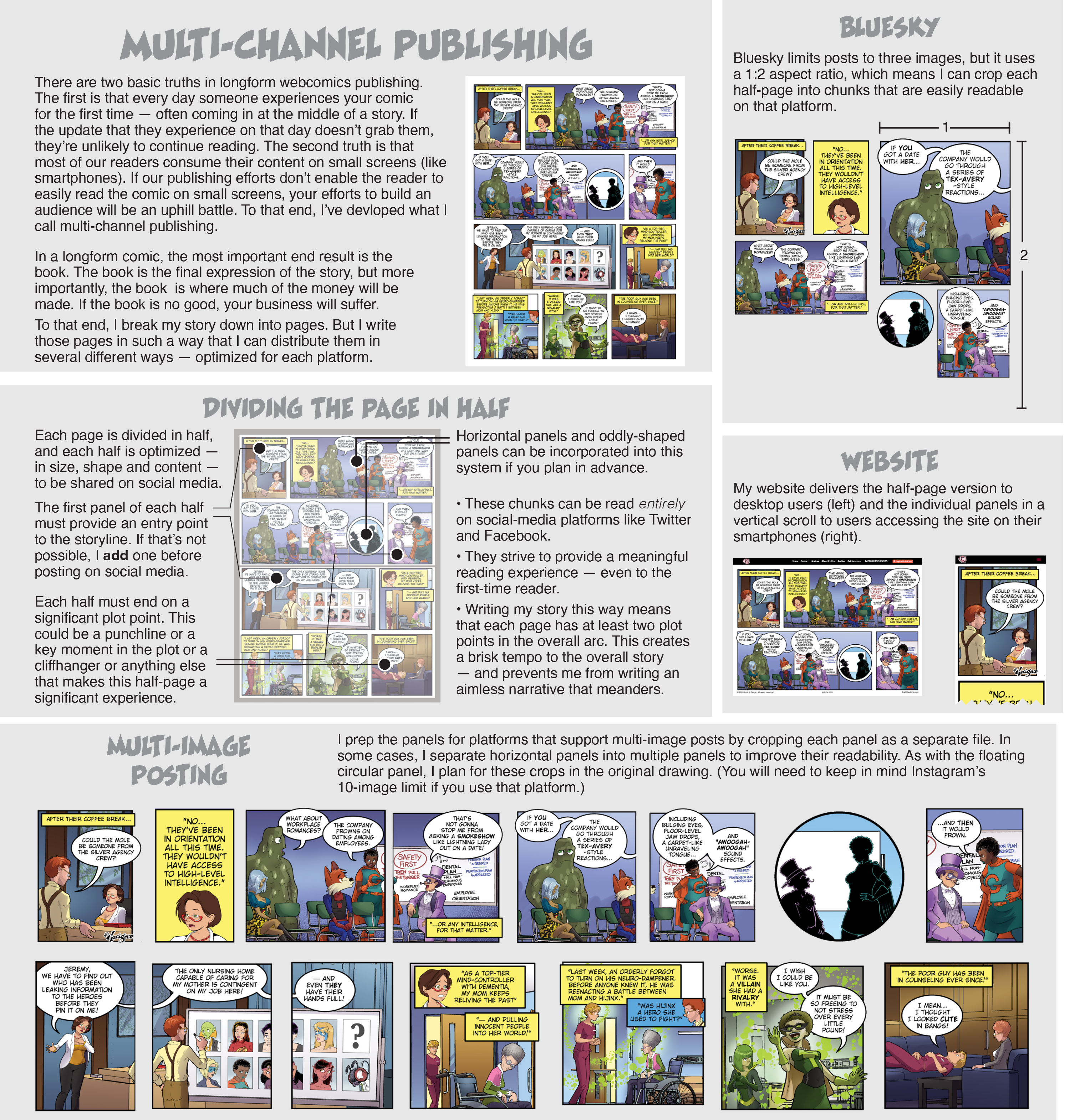
Certainly, this new feature will be good for posting several different images for backers. But it has a second use that is far more practical — especially as the consumption of content veers increasingly towards mobile screens. You can now post your comic in a panel-by-panel format that improves the reading experience on small screens.
If you’re following the Multi-Channel Publishing strategy shared here previously, you’re already prepping your comic in this format for sharing on sites like Instagram and Webtoons. (If not, you now have an additional reason to consider it.
Using these individual panels to post your comic to Patreon backers would give those backers using mobile devises a vastly improved reading experience. Truthfully, you could easily have the best of both worlds. The primary image could be the full, multi-panel comic. This would satisfy overall display aesthetics and the concerns of desktop users. The subsequent images would then be that same comic, divided into a panel-by-panel display.
Better still, you can bulk-upload several images at once with a simple drag-and-drop function. And you can change the sequence of display by dragging an image into its proper position. So, for example, if your panels uploaded as A-C-B, you can click on “C” and drag it into its proper placement after “B.”
Here’s a look at the results, from the screen of my iPhone…
If you’re not sure how many of your Patreon backers are using mobile devices to access your content, this is a great excuse to do a Patreon poll and ask them!
Homemade Photoshop or CSP brushes
Have you created your own brushes to use in Photoshop or Clip Studio? Share them on Patreon! You might be surprised how many of your backers are artists (or want to become artists).
Livedraw
Last, but not least, consider hosting a Patreon-exclusive livestream of your art process. It’s yet one more way of giving your backers exclusive access to an artist whose work they enjoy! (That’s you.)
What NOT to offer
Having discussed what to post, let’s take a moment to identify pitfalls to avoid. The first is physical rewards at lower levels. These are dangerous because they don’t scale. Sure, sending out a dozen post cards per month sounds easy — and cheap? But what about thirty — or a hundred-thirty? At some point, you cross a line past which this reward actually costs you more (in time and money) than it’s bringing in!
The other trap to avoid is offering Kickstarter rewards for free to your Patreon backers. Patreon backers don’t expect free Kickstarter rewards. In fact, most of them are all-to-happy to support both endeavors. Therefore, instead of offering those Kickstarter goodies for free, secretly open your Kickstarter campaign early for Patreon backers and give them access to a couple exclusive tiers that will expire by the time you open the Kickstarter to the public!
Common Threads
Have you noticed a couple of common threads here? The first is Community. Specifically, you’re building a Community on Patreon and the members of that group get perks, access and exclusive rewards that non-members don’t get. It’s a way to make your readers feel special — appreciated. The second thread is stop thinking of each thing you draw as a single reward. Each comic you create is actually multiple rewards! You should use every stage of the comics-making process as an exclusive-access reward — sketches, process videos, livestreams, calendars, backgrounds, wallpapers, etc. are fantastic rewards. And they all use a single comic/illustration! And then, when you’re done with a large number of individual comics, re-package them into eBooks, eComics and eSketchbooks to use them once again to reward your backers.
It’s not about working harder. It’s about working smarter.
2022 Cartoonist Studio Prize
The Center for Cartoon Studies and The Beat are announcing the tenth annual Cartoonist Studio Prize. The creators of two exceptional comics for this year will be awarded $1,000 each and a Wacom One Creative Pen Display. The deadline is January 30, 2022. Here’s how you can enter…
The content you are trying to access is only available to members.January To-Do List
This is the perfect time to get organized for a successful year in webcomics.
The content you are trying to access is only available to members.