Eisner Awards — Call for Entries
It’s time to nominate work for the Eisner Awards! Here’s what you need to know…
The content you are trying to access is only available to members.It’s time to nominate work for the Eisner Awards! Here’s what you need to know…
The content you are trying to access is only available to members.Yesterday, I shared thoughts on rethinking a concept from the early days of webcomics — the collective. Today, I have some advice on what you should consider if you’re thinking of forming one of your own.
The content you are trying to access is only available to members.In the first decade of webcomics, collectives were king. Pseudo-syndicates like Keenspot and Modern Tales helped to kick off the webcomics movement. Even after that business model faltered, independent cartoonists continued to work in groups, forming collectives like Blank Label Comics, Dumbrella, Girlamatic, Webcomics Nation, Spider Forest, and Boxcar Comics. After the rise of social media and the decline of ad revenue, collectives lost their two major strengths — audience building and monetization. Now, as social media enters a period of significant decline, it may be time to rethink comics collectives.
The content you are trying to access is only available to members.The National Cartoonists Society has released its call for entries. Here’s what you need to know:
DEADLINE: January 26
The National Cartoonists Society is issuing its annual call for entries for consideration for their NCS Divisional Awards, recognizing excellence in professional cartooning. As always, you DO NOT have to be a member of the NCS to have your work considered for a divisional award… all that is required is that the work be eligible, as detailed below.
All submissions and entry forms will be submitted digitally this year.
Upload one image for each sample
FILE NAME FORMAT
This is required for all divisions. Proof of 2024 publication date for each submitted sample of work MUST be included by uploading a separate proof file using the entry form. Failure to provide proof of publication date may result in disqualification.
Examples of proof:
Upload one proof image for each submitted image file.
FILE NAME FORMAT
Please name your files and/or label the proof documentation consistently so that it is clear which piece of submitted work it is for. For example, the sample Lastname_Firstname_1 should be accompanied by PROOF_Lastname_Firstname_1, and so forth.
*The Greeting Card category has been discontinued
All winners will be announced at the 80th Annual Reuben Awards Dinner in Columbus, Ohio.
Good luck to everyone who submits!
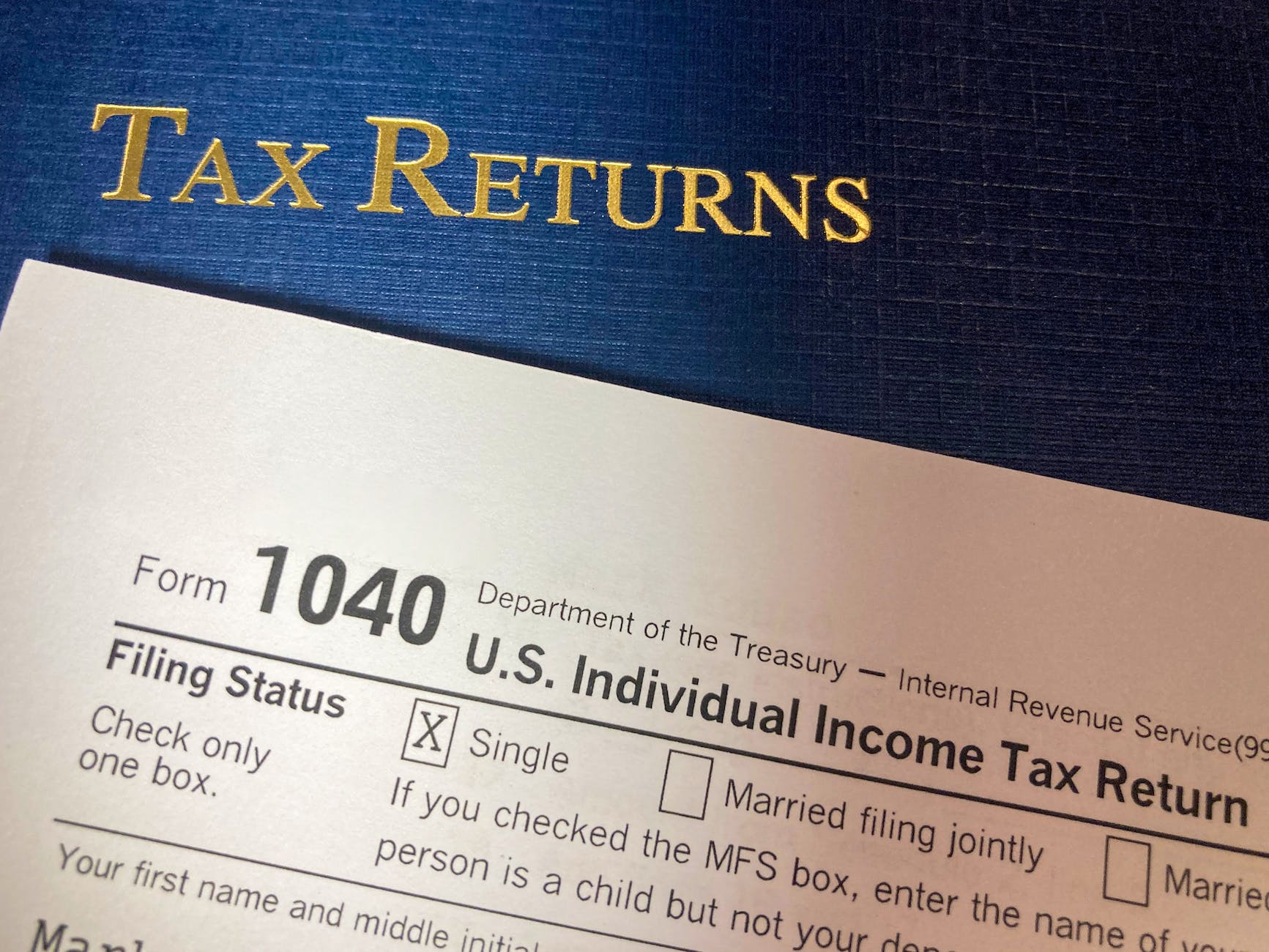
If you pay estimated income taxes on a quarterly schedule, The deadline for your fourth-quarter payment is approaching. Q4 payments are due on Jan. 15, 2026. According to IRS.gov, “If a payment is mailed, the date of the U.S. postmark is the date of payment. If the due date for an estimated tax payment falls on a Saturday, Sunday, or legal holiday, the payment will be on time if you make it on the next day that isn’t a Saturday, Sunday or holiday.”
You may also pay online, pay by phone, or use the IRS2GO app.
What does it really mean when someone looks at your career and says, “You should be doing more”?
In this episode of ComicLab, Brad and Dave respond to a pointed listener question that cuts straight to the bone: If they have the skills, the experience, and the ideas — why haven’t they launched even more projects? The answer isn’t defensive or dismissive. Instead, it becomes a clear-eyed breakdown of creative bandwidth, sustainability, work-life balance, and the invisible labor that propels up a long-term comics career. From Patreon and newsletters to storefronts, commissions, podcasts, and family responsibilities, they unpack why “doing enough” is often misunderstood from the outside — and why restraint can be a strategic choice, not a lack of ambition.
The conversation then pivots to one of the trickiest problems any humor writer faces: How to judge your own work when readers don’t get the joke. How many confused comments are just statistical noise—and when do they signal a real problem in execution? Brad and Dave dig into the uncomfortable middle ground between ego and humility, exploring how to listen to feedback without letting it derail your voice, and how to improve clarity without sanding off what makes your work distinctive. It’s a nuanced, experience-earned discussion about ramps, chasms, audience expectations, and why “it happens to everyone” is not an excuse — but also not a death sentence.
If you’ve ever felt pressure to produce more, or struggled to decide whether reader confusion is a warning sign or just the cost of taking creative risks, this episode offers hard-earned perspective from two cartoonists who’ve been navigating those exact questions for decades.
Takeaways
Since 2013, I’ve advocated that independent comic artists quit exhibiting at cons. That’s nearly ten years. And since that very first post, the pushback has been the same: “Sure, we’re not making a profit, but we go for the networking.” Except, for many of these people, networking is unimportant. And I can prove it.

At the end of every year, I do something that used to feel a little scary—but now feels absolutely essential: I audit everything.
Not just my comics. Not just my finances.
Everything.
Where am I spending my time?
What’s actually working?
What am I doing out of habit instead of intention?
When I did that audit at the end of 2025 (and honestly, the seeds were planted back in 2024), one thing became painfully clear: my promotional strategy had turned into a mess of inertia, obligation, and wishful thinking.
I was doing too much—and getting too little in return.
So for 2026, I’m simplifying. Radically.
I call it the 2-2-1 Rule, and it’s the promotional framework I’m using going forward.
The content you are trying to access is only available to members.Every January, Dave Kellett and I sit down on ComicLab and do something that is equal parts tradition and therapy: we talk about what we think is coming next, and how we’re personally bracing for it. This year felt different. Not because everything is suddenly clear — but because so much of it isn’t.
If I had to summarize my mindset heading into 2026, it would be this: clarity is gone, stability is fragile, and survival itself is a meaningful win. That framing underpins every prediction and every goal I’m setting for the year ahead.
Here’s what I see coming — and how I’m planning to respond.
The content you are trying to access is only available to members.If you’ve always wanted to build out your comics-font library, today’s the day! Comicraft traditionally holds a sale on Jan 1 every year, and the price of each of their fonts is based on the year. Today, every ComiCraft font will be $20.26 apiece.
That’s a huge saving on their high-quality lettering fonts. WildWords (which I use) is $129 for the rest of the year. WildWords upper/lower is usually $69. ComicCrazy is originally $395. And Yadda Yadda Yadda is typically $129. If you plan to purchase fonts for lettering or sound effects — or display fonts for logos and titles — you’ll want to mark this date on your calendar and load it up.
Here are some must-grab fonts to add to your collection…
Fantastic all-purpose dialogue font. Check it out here. (Usually $395)

Another versatile dialogue font. Check it out here. (Usually $139)

Sound effect font that will become your go-to. Check it out here. (Usually $29)

This display font is perfect for sound effects and strong headline or promo presentations. Check it out here. (Usually $39.)

Another sound-effect font you’ll use constantly. Check it out here. (Usually $29)

I’ll admit — I bought this on a whim. Then, I found myself using it consistently throughout my comics-making. Check it out here. (Usually $29)